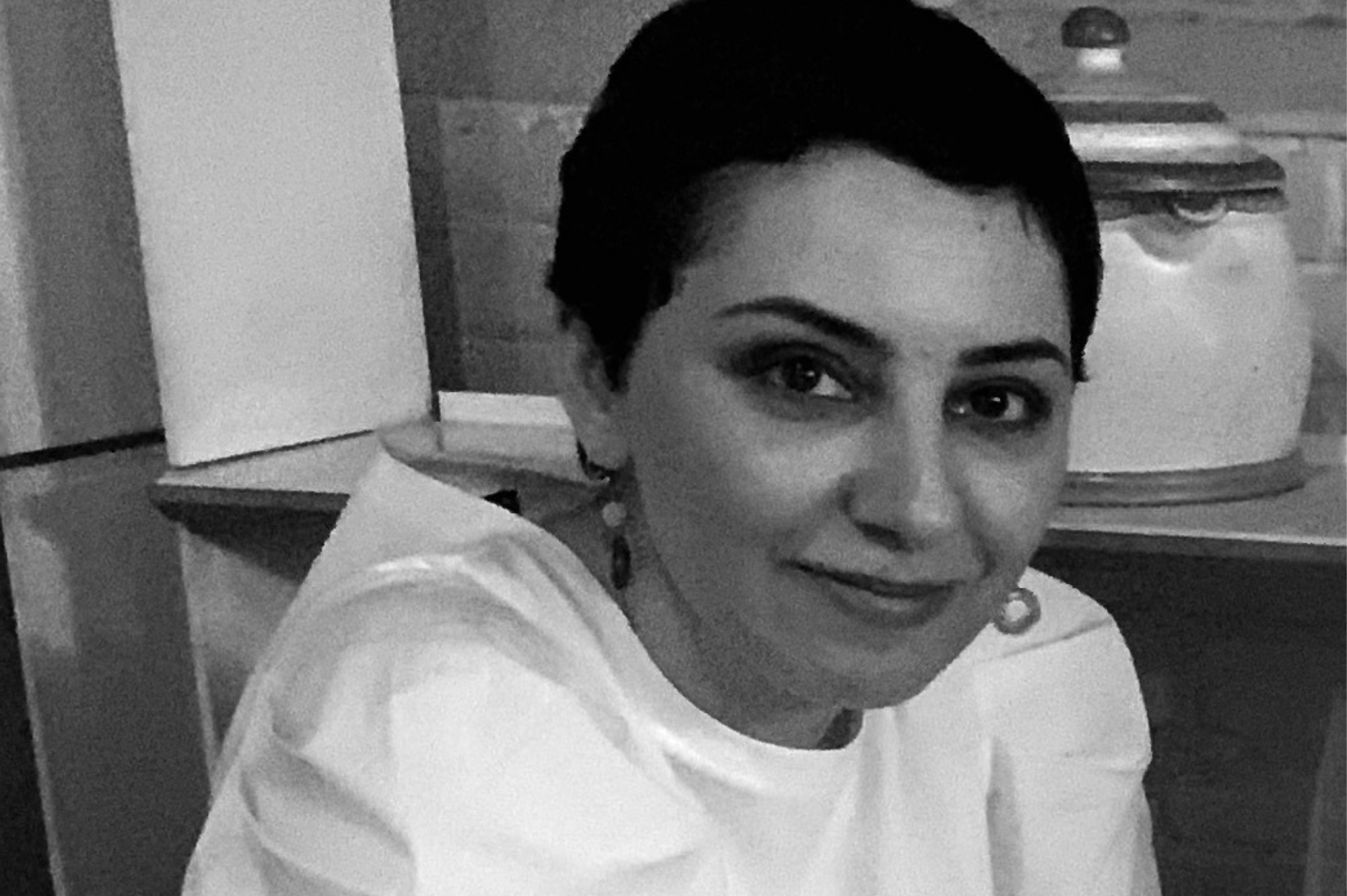
What do you do when you are a newcomer artist to Canada? In this prologue episode, learn about host Rimah Jabr’s experience making the leap to move to Toronto from Belgium, and her path to pursue a theatre career. Rimah shares the importance of mentorship in her own life and introduces the artists you’ll hear from in ThisGen Podcast.
In our career as theatre artists, it is essential to have people open doors for you, because this kind of cooperation enlarges the artist's vision and allows them access to the art institutions in the city. For me, continuing to make theatre was a matter of life and death. - Rimah Jabr
What is the influence of our environment on our imagination? Is such influence hereditary? And are our actions and dreams coloured by our ancestors’ contexts, be they in an open field, the ocean or a prison cell? Broken Shapes is a hybrid theatrical experience between installation, video and performance that explores how physical surroundings affect us mentally. Onstage we see one actress; her words are supported and interrupted by the visual interventions around her.
The story: A young woman in a city that has been occupied for decades. On the day of her father’s funeral, she discovers his architectural drawings. Overcome with sadness, she slips into the dream worlds and imagined places that he created. Broken Shapes will premier at The Theatre Centre in November 2022.
Broken Shapes is a collaboration between theatre-maker Rimah Jabr and visual artist Dareen Abbas, The project is being developed in the residency program at The Theatre Centre and co-produced at Kaai Theatre in Belgium. It is supported by the Canada Council for the Arts, the Ontario Arts Council, & BMO Financial & de Vlaamse Gemeenschap. Moussem Nomadic Centre.
In her audio drama, This is NOT what I want to tell you, Rimah Jabr sheds light on the wave of teenagers’ attacks that took place in 2015 and 2016 in Palestine. This series of almost daily ‘lone wolf’ knife attacks were not organized by militant groups but reflected hopelessness and despair, as a cry for help, especially among young Palestinians. Many kids, aged 10 to 15, who made these individual attacks, were either shot dead or imprisoned for tens of years. By following the story of Madama, we learn what the teens wanted to tell the world but couldn’t converse in ordinary language. Instead, they fell silent, and their bodies passed the message.
When Rimah moved to Toronto in 2015, she wrote, This is NOT what I want to tell you with the support of Why Not Theatre and Guillermo Verdecchia. This year she decided to adapt the piece into an audio drama. Rimah is planning to combine the audio with an installation in Toronto in the near future; stay tuned.
Editor’s Note:ThisGen Podcast was produced as an 8-episode series. If you are able, we encourage you to listen to the series here. For reference, transcripts are provided. Please confirm accuracy prior to quoting, as typos may be present. Click here to download this episode’s transcript.
Prologue
RIMAH: What to do when you are a newcomer artist to Canada? What stories do you really want to tell? How do we gain confidence in the art we make? And what does it mean to be mentored?
My first trip to Toronto was in april 2015. It was a short visit of only four days. I was planning on a more extended stay, but my Visa didn’t arrive at the time expected. I saw the lake, the CN tower, the big streets, and the beautiful, diverse city. And, I saw a play at the Tarragon Theatre that my partner invited me to see to show me the Canadian Theatre and encourage me to move to Canada.
I was afraid that by moving to Canada I will put an end to my career as a theatre maker which I just started in Belgium. I didn’t live in Belgium for a long time though, and relatively, I started in theatre at a late age. I’m not ashamed to say that the first play I saw in my life was when I was 30. In a place like Palestine, the art scene struggles with plenty of political and economic challenges, so that was normal. But, there was a writing workshop organized in Ramallah by Kattan Foundation in collaboration with the Royal Flemish Theatre from Belgium. I joined the workshop and decided that theatre is what I would like to do. A year later I was in Brussels rehearsing for a play with Belgium and Palestinian artists. A few months later I was auditioning to do my Masters in theatre making at Ritz, a Flemish school for the art in Brussels. I did two years of practical studies and I wrote many stories I always wanted to tell.
The thinking of quality or techniques not making any plans for the future, I was just happy with the present moment that finally I found the form I like to use to tell those stories. Then I moved to Canada to be with my partner. I was afraid I would lose the big step I made in my life, so I must continue pursuing my career. I started sending out emails to people I don’t know. I started with the director of the play I saw at the Tarragon Theatre, Ross Manson, the artistic director of Volcano Theatre who responded immediately, and put me in contact with Ravi Jain and Guillermo Verdecchia who acted promptly to commission me to write a play. “This is Not What I Want to Tell You”, that was the title of the play.
A year after that, I applied to Why Not Theatre Festival, The Riser project with my friend Natasha Greenblatt, and we made a play titled, “Two Birds, One Stone”. A year after that, I applied to the Theatre Centre, and now I’m working on my collaboration work “Broken Shapes” that is being developed in residency at the Theatre Centre. In the same year, I did my internship with Volcano theatre and I did another internship at Champlice Theatre which helped me to understand the history of this land.
In our career as theatre artists, it is essential to have people open doors for you, because this kind of cooperation enlarges the artist’s vision and allows them access to the art institutions in the city. For me, continuing to make theatre was a matter of life and death. Still, I wanted to say that the networking and mentorship I received in Toronto upon my arrival, were more than just working with artists who have more experience than me, it was more than getting a platform to show my place, it was more than making a resume, it was a kind of what I like to call “rooting process”, a way to belong to a community, finding a place for me as an individual artist to position myself inside the frame of the big picture of the theatre community and settle in a new country that will become my base.
This would not have happened if I hadn’t reached out to Ruth Howard, Ravi Jain, Guillermo Verdecchia, and Ross Manson, and others. These connections need to be multiplied.
My name is Rimah Jabr, a theatre maker based in Toronto. I’m your host in ThisGen podcast. I’m doing this podcast as a requirement for my PhD in Theatre and Performance Studies at York University, and when I thought of a Theatre Company to do my placement with, I immediately thought of Why Not Theatre; “why not?” Why Not Theatre was the first company to support me taking my first steps in the Toronto theatre scene, so this is not a new mandate for Why Not Theatre, and they continue to support young artists in different ways.
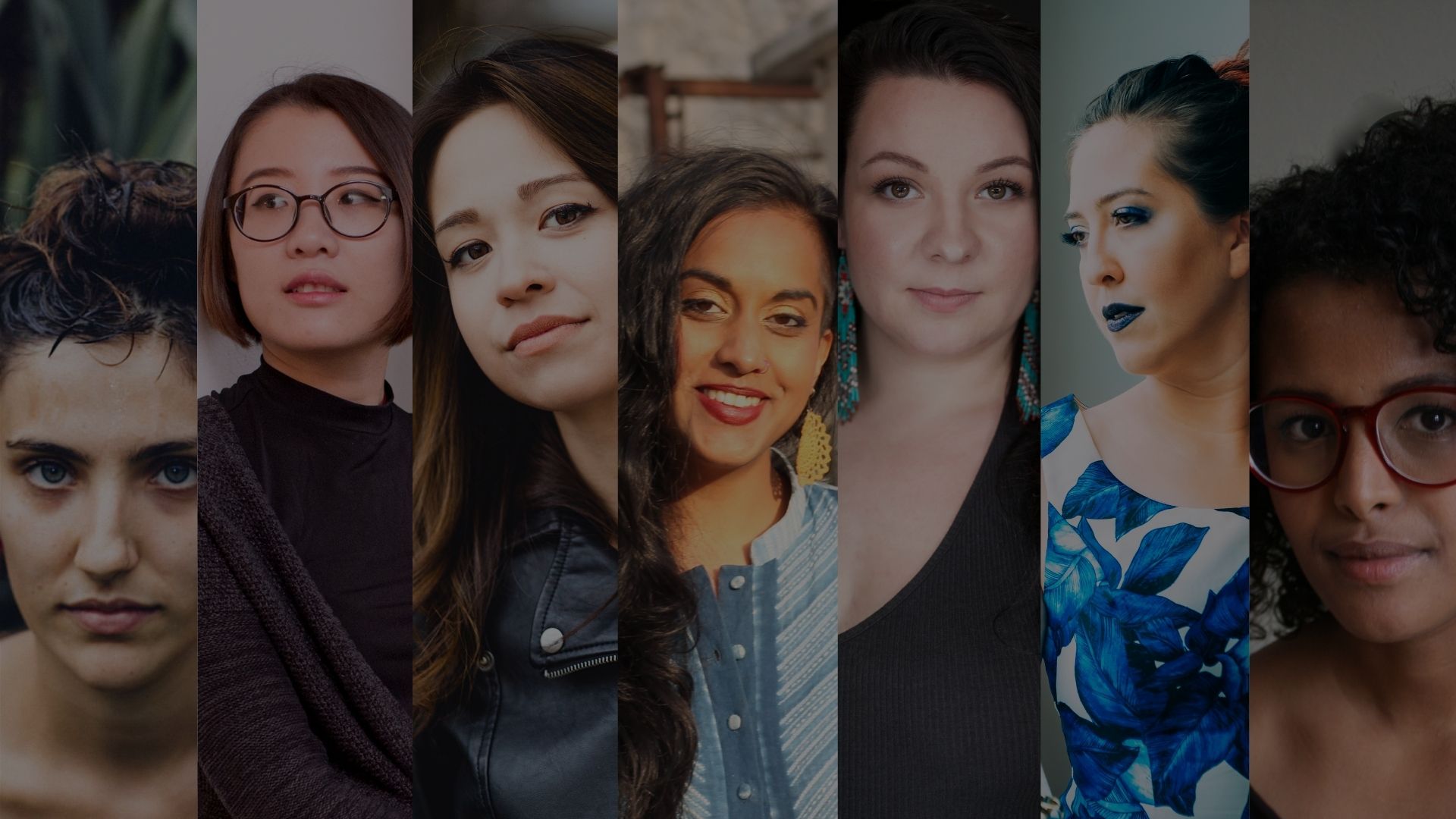
On May 26, Why Not announce the seven participants in This Gen Fellowship, a long in the works national leadership program aimed at helping female identifying Black, Indigenous or person of color theatre artists advance to the next stage of their career. The purpose of the program is to think beyond artistic directors in terms of where the leadership gaps are in the performing arts in Canada; including dramaturgs, designers, production managers.
The ThisGen 2020 Fellows are: Intisar Awisse from Waterloo, Ontario who’s paired with mentor Amrita Ramanan, dramaturgy USA. Tai Amy Graumanfrom Edmonton, paired with mentor Lisa Fa’alafi in creation direction, Australia. Bianca Guimarães de Manuel from Calgary, paired with mentor Julie Fox set design, Canada. Echo Zhou from Toronto paired with Mimi Lien, set design, USA. Crystal Lee, production management, paired with mentor Spike Lyne in Canada. Nikki Shaffeeullah from Toronto, paired with director Kirsty Housley from the UK. And finally, Olivia Shortt from Toronto, her mentor is Elisheba Ittoop, New York-based sound designer.
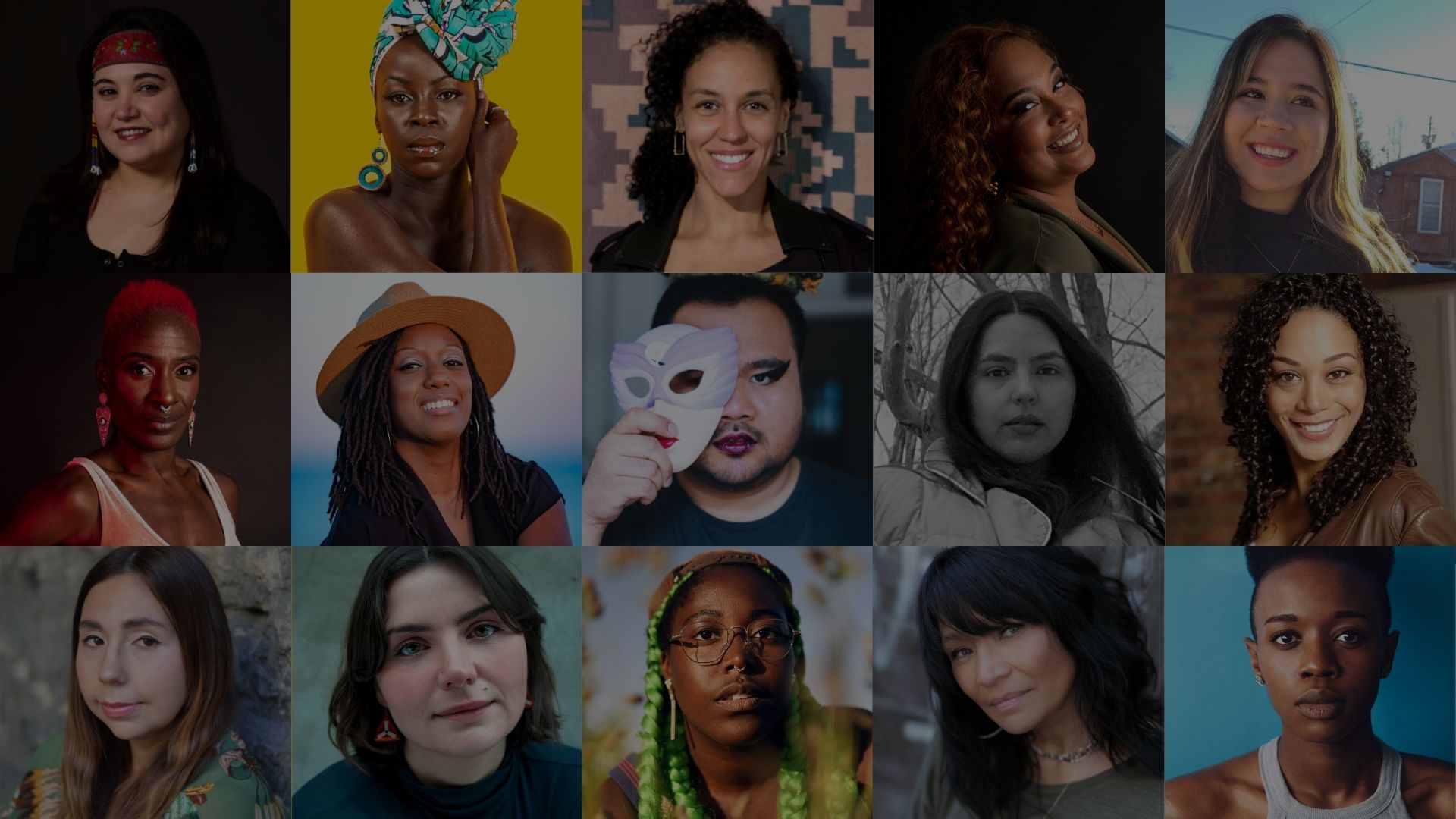
Over the coming weeks, I will be having conversations with the artists and the fellows. In each episode I will have two guests, the fellows and their mentors. We will be talking about the ThisGen program, the fellows experience, the process, expectations, plans where the fellows are in their process, and we will talk about their projects, and other issues such as tips on coaching, challenges for female artists, parenting, child care, what we expect from Canada’s art institutions, and other local and global issues. Wait for us, I hope — you’ll love the show.
That was ThisGen podcast created by Rimah Jabr. If you would like to know more about ThisGen Fellowship, please check Why Not Theatre website at whynot dot theatre. Thank you.
RIMAH: What to do when you are a newcomer artist to Canada? What stories do you really want to tell? How do we gain confidence in the art we make? And what does it mean to be mentored?
My first trip to Toronto was in april 2015. It was a short visit of only four days. I was planning on a more extended stay, but my Visa didn’t arrive at the time expected. I saw the lake, the CN tower, the big streets, and the beautiful, diverse city. And, I saw a play at the Tarragon Theatre that my partner invited me to see to show me the Canadian Theatre and encourage me to move to Canada.
I was afraid that by moving to Canada I will put an end to my career as a theatre maker which I just started in Belgium. I didn’t live in Belgium for a long time though, and relatively, I started in theatre at a late age. I’m not ashamed to say that the first play I saw in my life was when I was 30. In a place like Palestine, the art scene struggles with plenty of political and economic challenges, so that was normal. But, there was a writing workshop organized in Ramallah by Kattan Foundation in collaboration with the Royal Flemish Theatre from Belgium. I joined the workshop and decided that theatre is what I would like to do. A year later I was in Brussels rehearsing for a play with Belgium and Palestinian artists. A few months later I was auditioning to do my Masters in theatre making at Ritz, a Flemish school for the art in Brussels. I did two years of practical studies and I wrote many stories I always wanted to tell.
The thinking of quality or techniques not making any plans for the future, I was just happy with the present moment that finally I found the form I like to use to tell those stories. Then I moved to Canada to be with my partner. I was afraid I would lose the big step I made in my life, so I must continue pursuing my career. I started sending out emails to people I don’t know. I started with the director of the play I saw at the Tarragon Theatre, Ross Manson, the artistic director of Volcano Theatre who responded immediately, and put me in contact with Ravi Jain and Guillermo Verdecchia who acted promptly to commission me to write a play. “This is Not What I Want to Tell You”, that was the title of the play.
A year after that, I applied to Why Not Theatre Festival, The Riser project with my friend Natasha Greenblatt, and we made a play titled, “Two Birds, One Stone”. A year after that, I applied to the Theatre Centre, and now I’m working on my collaboration work “Broken Shapes” that is being developed in residency at the Theatre Centre. In the same year, I did my internship with Volcano theatre and I did another internship at Champlice Theatre which helped me to understand the history of this land.
In our career as theatre artists, it is essential to have people open doors for you, because this kind of cooperation enlarges the artist’s vision and allows them access to the art institutions in the city. For me, continuing to make theatre was a matter of life and death. Still, I wanted to say that the networking and mentorship I received in Toronto upon my arrival, were more than just working with artists who have more experience than me, it was more than getting a platform to show my place, it was more than making a resume, it was a kind of what I like to call “rooting process”, a way to belong to a community, finding a place for me as an individual artist to position myself inside the frame of the big picture of the theatre community and settle in a new country that will become my base.
This would not have happened if I hadn’t reached out to Ruth Howard, Ravi Jain, Guillermo Verdecchia, and Ross Manson, and others. These connections need to be multiplied.
My name is Rimah Jabr, a theatre maker based in Toronto. I’m your host in ThisGen podcast. I’m doing this podcast as a requirement for my PhD in Theatre and Performance Studies at York University, and when I thought of a Theatre Company to do my placement with, I immediately thought of Why Not Theatre; “why not?” Why Not Theatre was the first company to support me taking my first steps in the Toronto theatre scene, so this is not a new mandate for Why Not Theatre, and they continue to support young artists in different ways.
On May 26, Why Not announce the seven participants in This Gen Fellowship, a long in the works national leadership program aimed at helping female identifying Black, Indigenous or person of color theatre artists advance to the next stage of their career. The purpose of the program is to think beyond artistic directors in terms of where the leadership gaps are in the performing arts in Canada; including dramaturgs, designers, production managers.
The ThisGen 2020 Fellows are: Intisar Awisse from Waterloo, Ontario who’s paired with mentor Amrita Ramanan, dramaturgy USA. Tai Amy Graumanfrom Edmonton, paired with mentor Lisa Fa’alafi in creation direction, Australia. Bianca Guimarães de Manuel from Calgary, paired with mentor Julie Fox set design, Canada. Echo Zhou from Toronto paired with Mimi Lien, set design, USA. Crystal Lee, production management, paired with mentor Spike Lyne in Canada. Nikki Shaffeeullah from Toronto, paired with director Kirsty Housley from the UK. And finally, Olivia Shortt from Toronto, her mentor is Elisheba Ittoop, New York-based sound designer.
Over the coming weeks, I will be having conversations with the artists and the fellows. In each episode I will have two guests, the fellows and their mentors. We will be talking about the ThisGen program, the fellows experience, the process, expectations, plans where the fellows are in their process, and we will talk about their projects, and other issues such as tips on coaching, challenges for female artists, parenting, child care, what we expect from Canada’s art institutions, and other local and global issues. Wait for us, I hope — you’ll love the show.
That was ThisGen podcast created by Rimah Jabr. If you would like to know more about ThisGen Fellowship, please check Why Not Theatre website at whynot dot theatre. Thank you.